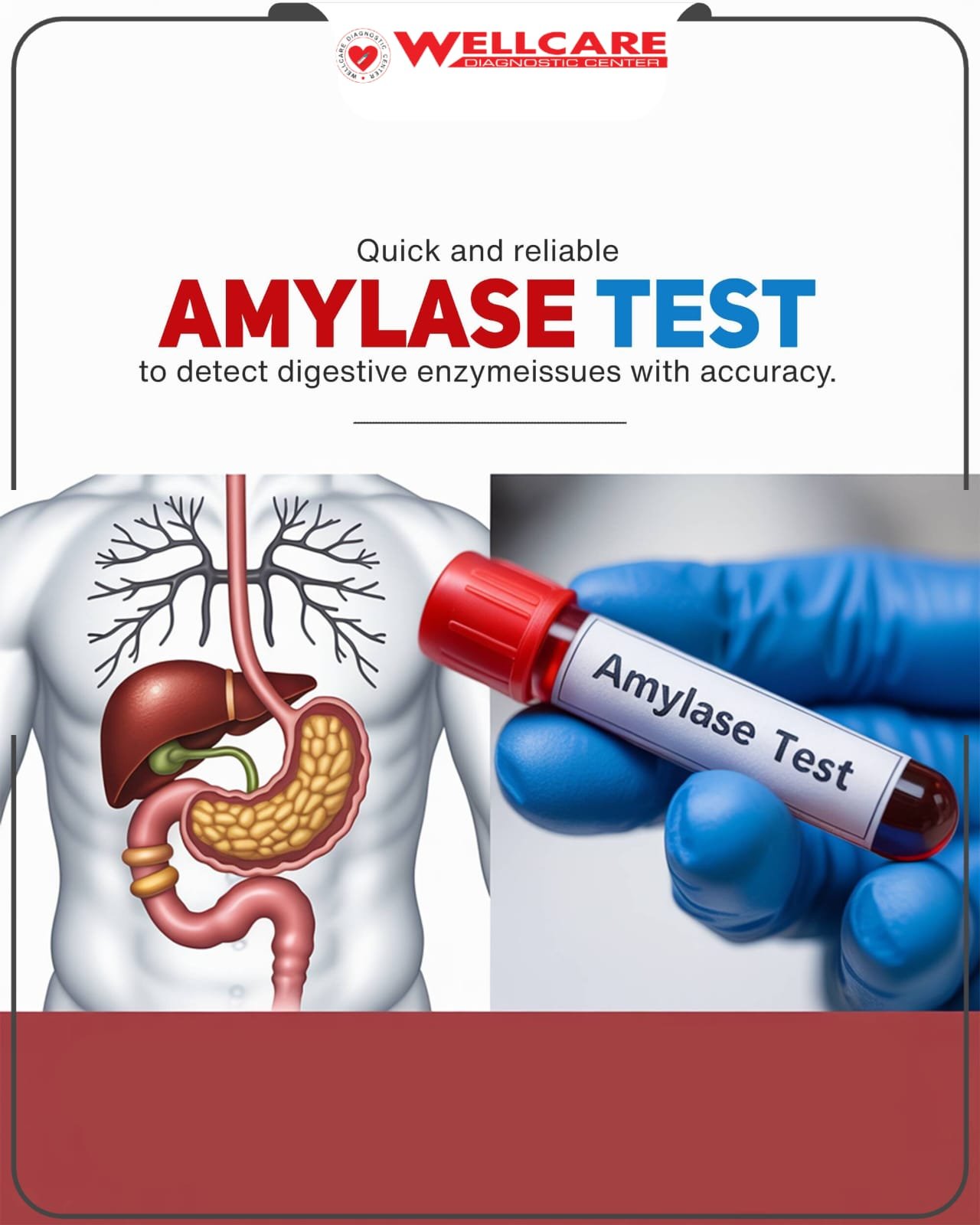
Amylase Test: Symptoms, Purpose, and When You Need It
What Is an Amylase Test?
An amylase test measures the amount of amylase enzyme in your blood or urine. Amylase is produced mainly by the pancreas and salivary glands, helping your body break down carbohydrates during digestion. Abnormal amylase levels can signal issues with the pancreas, digestive system, or salivary glands.
Why Is the Amylase Test Important?
Doctors use the amylase test to detect and monitor conditions such as:
Acute pancreatitis
Chronic pancreatitis
Pancreatic duct obstruction
Gallbladder disease
Salivary gland infections (e.g., mumps)
Digestive disorders
It provides quick, valuable insight into pancreatic health.
Symptoms That May Require an Amylase Test
You may need an amylase test if you experience:
Severe or persistent upper abdominal pain
Nausea or vomiting
Fever with abdominal discomfort
Loss of appetite
Pain spreading to the back
Swelling or pain in the jaw or salivary glands
Unexplained digestive issues
These symptoms may indicate inflammation, infection, or blockages involving the pancreas or glands.
When Is an Amylase Test Needed?
A healthcare provider may recommend an amylase test to:
Diagnose acute or chronic pancreatitis
Assess pancreatic injury or blockage
Evaluate conditions affecting the salivary glands
Monitor pancreatic recovery following surgery
Investigate gallstones and related complications
Help determine the cause of digestive or abdominal pain
Fast results from this test help guide accurate diagnosis and timely treatment.
How Is the Amylase Test Performed?
Blood Test: A small sample is taken from a vein, usually in the arm.
Urine Test: A fresh sample is collected for lab analysis.
Both tests are simple, quick, and generally painless.
What Do High or Low Amylase Levels Mean?
High Amylase Levels: May indicate pancreatitis, gallstones, blocked ducts, or salivary gland disorders.
Low Amylase Levels: May be associated with pancreatic damage, kidney disease, or liver disorders.
Your doctor will interpret results based on symptoms and medical history.
Frequently Asked Questions (FAQs)
1. What conditions does an amylase test diagnose?
It primarily helps diagnose pancreatitis, salivary gland infections, and digestive disorders.
2. Do I need to fast before an amylase test?
In most cases, no fasting is required—but follow your doctor’s instructions.
3. How long do results take?
Most labs provide results within hours to 1 day.
4. Is an amylase test accurate?
Yes. It is a widely used, reliable indicator of pancreatic function.
5. Can medications affect amylase levels?
Yes, certain medications may influence results. Always inform your healthcare provider.
SEO Meta Description
Amylase Test – Learn what an amylase test measures, symptoms that require testing, and when it’s needed. Understand causes of high or low amylase levels, diagnosis of pancreatitis, and frequently asked questions